

Did you get any packages from ييوو during this year’s Double 11 (China’s biggest shopping festival)? Chances are, you did.
There is a running joke in Yiwu. When young people travel to tourist spots across China and bring back “local souvenirs” for their families, the elders just laugh: “Are you out of your mind? These are all wholesaled from Yiwu! You could have bought them at home for half the price.”
It’s true. Almost every “ancient tourist street” in China sells handicrafts that actually came from Yiwu. As the world’s largest wholesale market, every day here feels like a shopping festival. Every second, thousands of packages are shipped globally. Despite not being a coastal city, the Madrid-Yiwu railway stretches thousands of miles, sending goods directly to Europe. Not surprisingly, Yiwu consistently ranks at the top in China for per capita income.
Yet, if you talk to a successful Yiwu businessman, they are incredibly humble. They might casually wave a newly bought luxury watch and point to their expensive car, while telling you with a straight face: “Oh, I’m just from a poor little mountain village.”
So, how exactly did the people of Yiwu get so rich?
How do people in Yiwu Get Rich?
1. The Push of Destiny

Geography worked against them. Yiwu is right in the center of Zhejiang Province, surrounded by mountains on three sides. Even its mother river, the Yiwu River, flows from east to west—the opposite direction of most major Chinese rivers. Some say this symbolizes the Yiwu people’s courage to go against the current.
Historically, Yiwu was cut off from the prosperous coastal cities like Ningbo and Wenzhou. Worse still, over 90% of the land is hilly, and the soil is sticky, red clay. It turns to mud when wet and cracks when dry, making it terrible for farming.
Under the immense pressure of simply trying to survive and feed their families, “doing business” wasn’t a choice for the Yiwu people; it was their only way out.
2. Chicken Feathers for Sugar

When destiny pushes you into a corner, sometimes it forces you down a path to greatness.
Decades ago, the first Yiwu merchants picked up their shoulder poles, shook their rattles, and walked through the mountains. They survived by bartering: trading their homemade brown sugar for chicken, duck, and goose feathers. From this simple trade—known locally as “Chicken Feathers for Sugar”—a powerful commercial gene was born in the blood of the Yiwu people.
3. The “Sugar Gang” and the First Supply Chain

This “chicken feathers for sugar” model might seem primitive, but it was actually a brilliant, self-sustaining supply chain.
The brown sugar came from sugarcane grown along the riverbanks—a crop that needed water but survived well in the poor soil. The feathers they traded for weren’t just thrown away. The everyday feathers were mixed with ash to create fertilizer, finally solving the problem of Yiwu’s barren farming land. Meanwhile, the high-quality feathers were crafted into feather dusters and sold for a neat profit.
As these groups of “sugar bearers” grew, they organized. They became known as “The Sugar Gang” (敲糖帮), using the sound of their shaking rattles as their trademark. They didn’t just stick to sugar and feathers; they realized what the remote mountain villages desperately lacked—daily necessities like needles, thread, and small tools. Without knowing the modern term for it, they had perfectly mastered “understanding user demand.”
They were also deeply inspired by the famous Huizhou merchants who historically traveled through Yiwu. These traveling businessmen left behind advanced business philosophies and stunning Hui-style architecture—with elegant horse-head walls and courtyards—that you can still admire in Yiwu’s Fotang Ancient Town today.
4. A City of Bosses

In Yiwu, “Boss” and “Boss Lady” aren’t just job titles; they are the standard way people say hello to each other. It is said that one out of every ten people in Yiwu owns a market stall. In their eyes, everyone they meet is a potential business partner.
But Rome wasn’t built in a day, and neither is a Yiwu business empire.
Most of these “bosses” learned their trade on the streets. It started in a small town called Niansanli, where local officials bravely issued the first “temporary street vending permits.” Later, a courageous local leader named Xie Gaohua took a massive political risk to officially open a small commodity market near a ditch in Huqingmen. That was the birth of the first-generation Yiwu market.
5. Sleeping on Floors and Doing Homework on Stalls
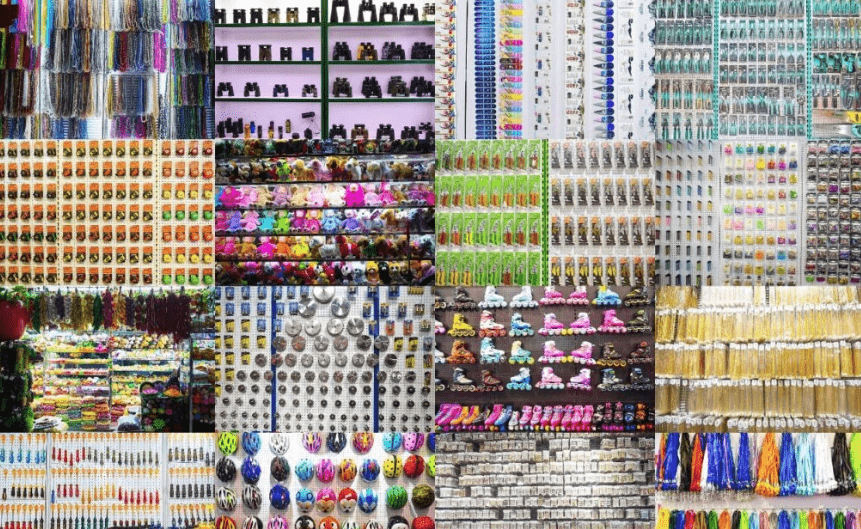
There is a well-known fact in China: businesspeople from Wenzhou and Yiwu are the hardest workers you will ever meet.
When the early Yiwu merchants traveled south to Guangdong to buy goods, they would take the train. If there were no seats, they didn’t complain—they simply slept on the floor under the seats, guarding their merchandise. The local saying goes: “If you want to be the boss, you have to sleep on the floor first.” It was entirely normal to see children doing their school homework sitting on piles of wholesale goods while their parents managed the stall.
Through sheer grit, Yiwu has evolved its market five times. Today, it stands as the sixth-generation market—a massive global Free Trade Zone designed to “buy the world and sell the world.”
And what about the threat of e-commerce? Has it killed the physical market? Not at all. As one local boss wisely puts it: “It’s just like ordering takeout online. If you have actually seen the physical restaurant with your own eyes, you feel much safer buying from them.”
6. Fierce Bargainers, Generous Hearts

Foreign buyers sometimes misunderstand the Yiwu people. Because of their intense negotiating skills, they are sometimes labeled as “stingy” or “exclusive.”
Shopping in the Yiwu market can indeed feel like a tug-of-war. Sometimes you have to be loud and cut the price in half; other times, you have to whisper and negotiate softly. But watch two Yiwu businessmen bargain: no matter how fierce the debate, they almost always reach a win-win price quickly. This intense focus on every single penny is a survival habit left over from the poverty-stricken years of the older generation.
But call them stingy? Look at how they treat education. Instead of selling off their most beautiful, scenic land with mountains and lakes to luxury real estate developers, the Yiwu government used it to build Yiwu No. 1 High School. They give the best they have to the next generation.
7. A Melting Pot of the World

Far from being exclusive, Yiwu is incredibly inclusive. This small city of around 800,000 locals welcomes over 15,000 foreign residents every year. The international vibe here easily rivals that of Beijing or Shanghai.
Walk through the bustling Binwang Night Market, and you will see the true face of Yiwu. You might spot a businessman from Dubai, wearing a traditional white robe, flawlessly bargaining in the local Yiwu dialect. A few steps away, a buyer from Africa might be enjoying a freshly baked local Donghe meat pie. Many of these expats have fallen in love with the city’s endless opportunities and now call it their “second hometown.”
When Chinese New Year arrives, the millions of migrant workers and international buyers head home, and the normally chaotic city finally falls silent. Local families gather around old-fashioned tables to eat traditional braised pork and steamed bread stamped with the character “Fu” (Good Fortune).
But this quiet never lasts long. After the Lantern Festival, the dragon dances end, and the city wakes up again. And those little kids who used to do their homework on piles of wholesale goods? They are now the confident new bosses and boss ladies, ready to drive this city’s relentless commercial journey into the future.
الخاتمة
Yiwu is more than just a massive wholesale market; it is a city built on resilience, unity, and a relentless drive for business. When you source products from Yiwu, you aren’t just buying from a supplier—you are tapping into a trading culture that has been perfecting its craft for generations.


رد واحد